
Holy smokes it has been a long time since I posted to this website covered in dust. The world is a crazy place right now and I just didn’t have it in me to sit down and actually collect my thoughts on a book, a concert, or a place I had traveled. However, after reading The Women by Kristin Hannah, I have so many feelings bursting from the seams that I have to put somewhere.
Hannah’s historical fiction follows the life of a young woman named Frances “Frankie” McGrath as she joins the Army as a nurse and is sent to Vietnam during the Vietnam War, and also explores her experiences returning from the war as a very scarred person.
Part one, which focuses on what Frankie experienced leading up to and during her enlistment with the Army, opens with a quote from Frank Church, a man I had never heard of, stating “This war has…stretched the generation gap so wide that it threatens to pull the country apart.” Church was a senator from Idaho who had formerly served in the Army during WWII. He was one of the first senators to publicly oppose the Vietnam War even though his stance caused other Idaho politicians to rally for him to be recalled. He then went on to become very critical of American intelligence agencies and their “capacity to make total tyranny in America.” Having this quote in mind as we watch Frankie and others enter into a war that to this day many still have questions as to why it started and continued for so long, a tone was set that while it is always us versus them when it comes to war, it was also becoming us versus them back home, and these soldiers would be the casualties.
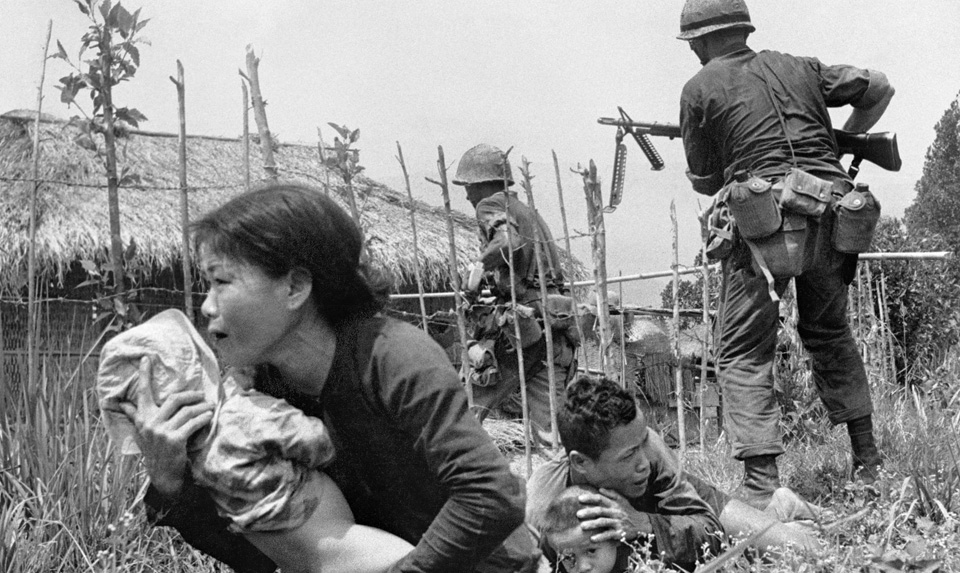
Frankie joins to follow her brother who has also been sent to Vietnam, but to also make her father proud as he sees military service as a very commendable act so much so he has a “wall of heroes” in which he displays pictures of those he knows that have served. She knows she has skills since she had gone to college for nursing, and feels she could make a difference. However, while Frankie’s brother receives a party to send him off, Frankie receives hostility as her family does not believe a woman has any place in the military. She knows she made a mistake joining, but it is too late. The Army already has her signature on that dotted line.
When she arrives in Vietnam, she is a nervous wreck. It is really hard to watch her suffer in this place where no human should be. However, her bunk mates, two fellow female nurses Ethel and Barb, as well as the first male doctor she works with, Jaime, all give her the encouragement she needs in order to build her confidence and become a pretty damn good nurse. We get to see her do things as extreme as amputations, but also get to see her hold men’s hands and talk to them about their lives as they go home or take their final breathes. It was such a wonderful display of the talents one had to have in order to be an effective nurse during that time.

There was a lot of great writing when it came to who these people were and many moments where we got insight into their personalities while they unwound a bit whether at the bar, danced like no one was watching, or even just sat on the beach after a long shift. When you are reading about such horrible things, sometimes we can forget these are human beings performing these things. So when we are given moments where the characters are going home, being sent to other areas of Vietnam, falling in love, or getting injured themselves, we are not only reading it, we are feeling it. It’s an interesting dynamic to feel with the book because the war itself was felt this way by many because it was the first in which the public was seeing video footage of what was happening and hearing interviews in real time from those serving.
The second part of the book follows Frankie after she returns home. A home she does not feel welcome in. She is spat on by the public, treated with disdain by her family, and told by numerous people that “there were no women in the war.” All of this happens as she tries anything to help her find her identity as a veteran. While many men also experienced malice from the public based on their service, for a woman to have her service doubted and to not be able to openly speak about what she experienced, that is a deep psychological trauma that would make anyone lose their sense of self-worth. Frankie ends up doing just this and turns to alcohol and pills to help get through her days. She hits rock bottom after numerous events trigger memories and exacerbate her sense of not belonging. I don’t want to give too much away, but I will say as the war ends Frankie starts to find some of the help she needs and tries her best to be the best version of herself she can.
It is important to note that this section of the book opens with a quote from the book American Daughter Gone to War by Winnie Smith. Smith was a combat nurse who served in Vietnam, and one of the first women to write about her experiences. She served as a combat nurse outside of Saigon in the intensive care unit. Her novel gives a firsthand account of the war itself, but also explores the loss of herself and the loss of America’s own faith, and how she fought to find peace at the end of it all. The more I learned about Winnie Smith, the more I noticed how much Hannah pulled form her story to create the character of Frankie.
I have read some reviews that didn’t like the level of focus on romance and love between Frankie and some of the men in the book. If you are a Hannah reader, I don’t think it will bother you much. Hannah started as a romance writer so it only makes sense she would draw you into connecting with a character using love and romance. I think the other thing that struck me about these critiques is that during this time, women were expected to be wives and mothers. End of story. Well those two roles revolve around love, and Frankie was definitely feeling that pressure to find just that. One must also remember that Frankie was a sheltered 21-year-old woman when she left for the war. Emotionally she was quite young, and this developed into some pretty problematic approaches to love that were not entirely her fault, but were the nature of her environment.
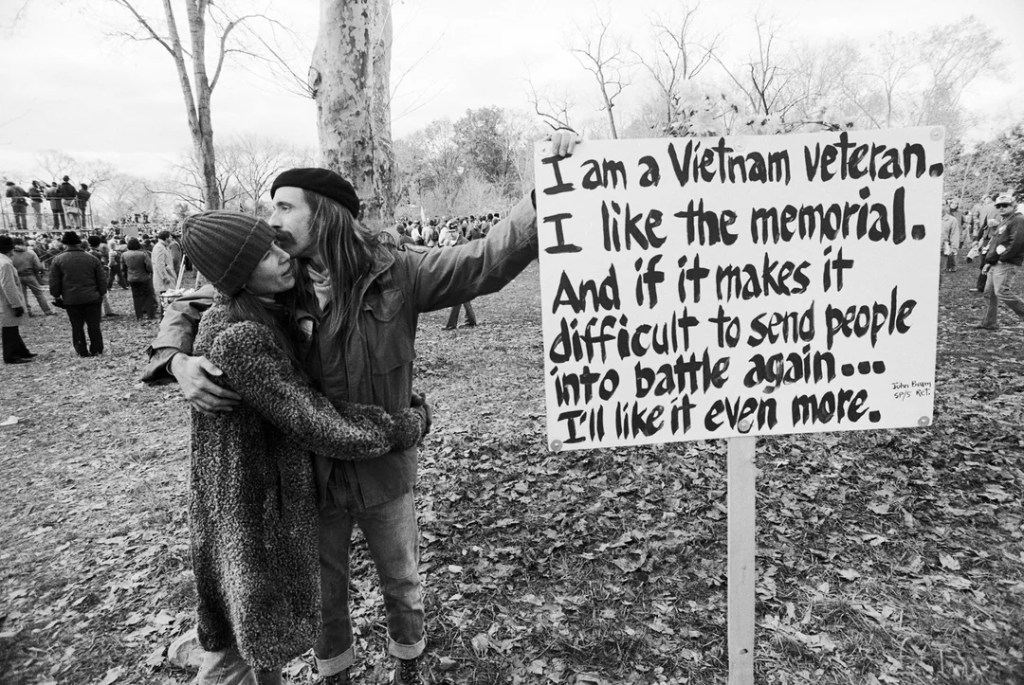
The book has received lots of praise about its approach to how it depicts the war and the energy in the air around the war. While I am not an expert on the war by any means, as I sat and listened to many in my book club that were alive during this time and had friends and relatives who served, you could see they were moved. As Hannah states “words were creators of worlds,” and these words had warped them back to a world they had lived through. Warped the younger of us to that world with them. That is the beauty and power of this book.
There are other mixed reviews about the feminism portrayed in this book. While most understand the importance of bringing to light the injustices women have faced throughout history, others believe the story could have been told without the “blatant bra burning sentiment” (this was in an actual review). Let me be very clear on something that anyone reading this should know about me. I do consider myself a feminist in the sense that women should have an equal place at the table as men. I also think men that come from underprivileged backgrounds and groups should also be awarded the same considerations as women in terms of an equal place at the table. They are not mutually exclusive. Feminism is very clear about equity for all, but the grey area comes with who the actors are who drive that and how it is done. The “bra burning sentiment” is simply Hannah being very clear on the facts of a woman’s experience during and after the war, and then exploring her own sentiment with how these women should address it. She shows women being supportive of one another, but also men being a voice for women. She explores damage both men and women had during this time, but how the female experience was unique. There have been countless movies and novels depicting the detriments of combat, which was a unique male experience at this time. Women get to have this moment to explore their experience. I would encourage everyone to take a moment to explore this moment with these women.
As always happy reading, and enjoy some of my favorite quotes, and please respond with yours!
– Bombing for peace is like screwing for virginity!
– Thank God for girlfriends. In this crazy, chaotic, divided world that was run by men, you could count on the women
– War trauma isn’t a competitive sport.Nor is it one-size-fits-all.
– I wasn’t afraid to go to war, and I should have been. I am afraid to go to the memorial, and I shouldn’t be.
– The women had a story to tell, even id the world wasn’t quite yet ready to hear it, and their story began with three simple words. We were there.
 Feet Up, Speak Up